In clinic, I frequently meet patients (often age 25-65) with a circular pattern of spine pain worse after sitting or bending and somewhat better with standing or walking. They may describe "numbness" into the thighs or arms that, on closer questioning, is actually burning or tingling rather than true loss of sensation. Pain can flare for days to weeks. After an MRI, the words "bulging" and "degenerating" can sound scary. Patients often imagine bones or discs "pinching" nerves. That's usually not the story here.
The young disc
Younger discs have a soft, mobile center (nucleus pulposus) contained by flexible annular "rings." As we bend and twist, that soft center gently presses on its padded walls, helping the spine move smoothly. This is one reason younger backs are more flexible and bounce back faster.
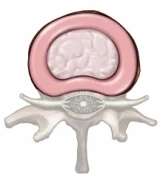
Inevitable change (25 - 65)
With age, the nucleus works on the annular walls. Mechanically, this can create "bulging" and small tears (fissures). This isn't always painful. But when nuclear material settles toward the back of the disc, the body may "splint" with muscle spasm in front and back.
Why does sitting hurt more? Sitting lets the nucleus drift backward into the sensitive annular wall. Standing up or extending helps the nucleus "re-center."
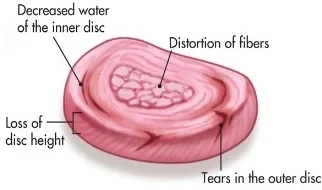
Key point: Not a "Pinched Nerve"
This common "degenerative disc" pain is not the same as a pinched nerve (lumbar radiculopathy). It can hurt, sometimes a lot, but it isn't generally dangerous.
Later stages (often 65+)
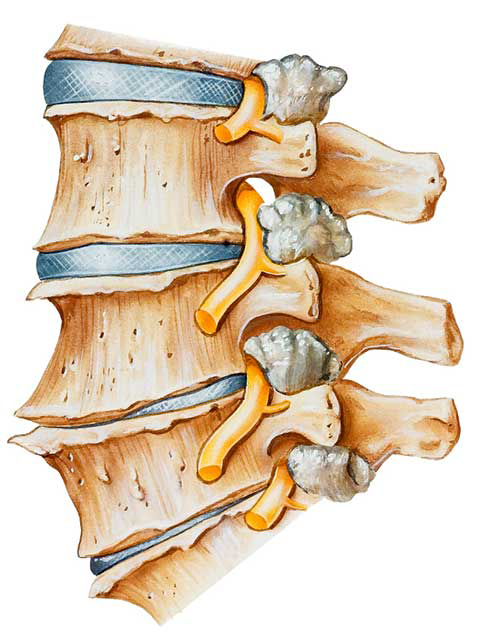
Over time, the nucleus dries and stiffens, and the disc becomes flatter and less mobile. At that point, it is often less painful. The spine above and below may take on more motion, sometimes becoming the new trouble spot.
What helps?

Reassurance
Knowing these MRI findings are universal after age 30 reduces fear.

Movement
Extension-based exercise or PT eases pain by restoring balance.

Meds/Rest
Anti-inflammatories and brief rest for acute flares only.

Injections
Can help temporarily but are rarely needed long-term.
Bottom line: "Degenerative disc disease" is mostly a reflection of time, not necessarily damage. Understanding it and moving with confidence is often the best treatment.